




Dovetail workholding vs. pre-stamping: Where the real savings begin
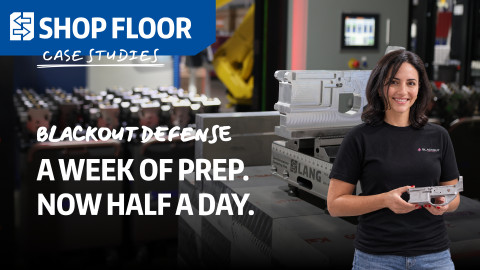
This video is hosted on YouTube. To watch the video please accept the media cookies in the privacy settings.
Dovetail workholding: a reliable method with a catch
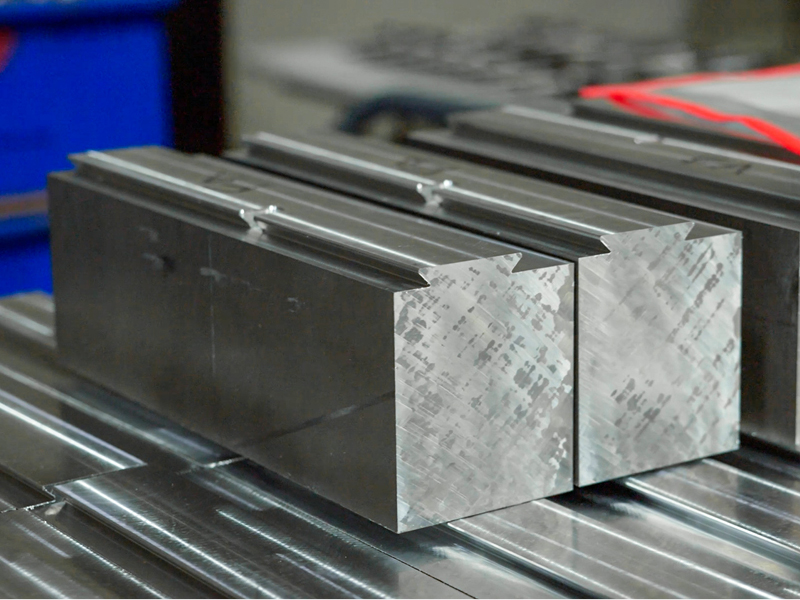
Dovetail workholding is widely used in CNC machining for good reason. By machining an undercut profile into the raw stock, the workpiece can be securely held in a matching fixture. This provides excellent resistance to pull-out forces and allows access to multiple sides of the part. For complex 5-axis machining applications, these are valuable advantages. However, there's an important consideration: Before the actual machining can begin, the dovetail profile has to be cut into the stock.
Depending on the part and production volume, this preparation can require considerable machine time, dedicated tooling, and operator involvement. In many applications, the dovetail also requires additional stock that must be purchased, machined, and eventually removed. None of this makes dovetail workholding a bad choice. But it does raise an important question: Could the same workholding objective be achieved with less preparation?
Makro•Grip® pre-stamping: a proven industry standard
Developed by LANG Technik more than two decades ago, Makro•Grip® pre-stamping has become an established benchmark in workholding technology. Today, machine shops around the world rely on this proven approach to prepare raw stock for secure and efficient machining.
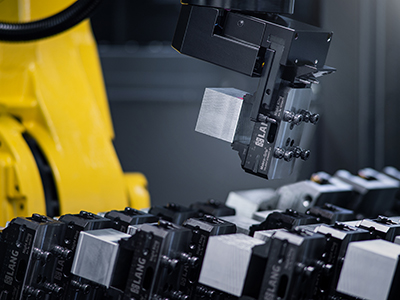
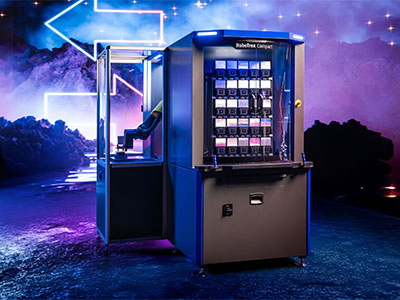
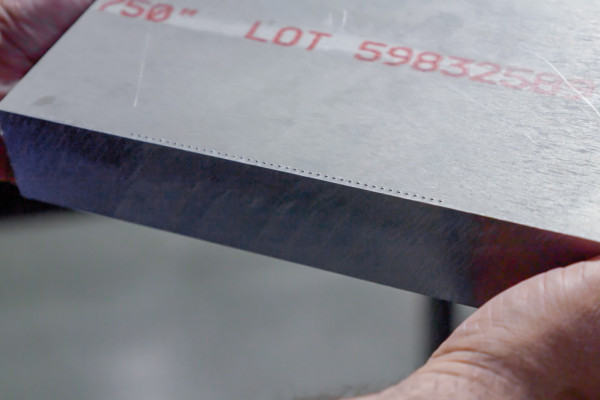
Instead of milling a dovetail into the workpiece, Makro•Grip® takes a different approach: It creates a precise clamping profile through a quick pre-stamping operation outside the CNC machine. What previously required machining time can now be accomplished in just seconds, without tying up valuable machine capacity.
How pre-stamping creates a secure grip
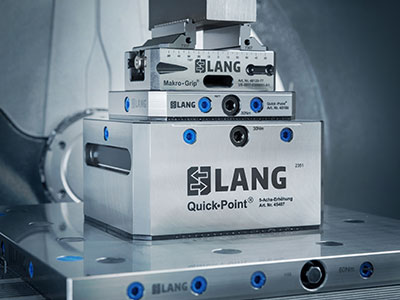
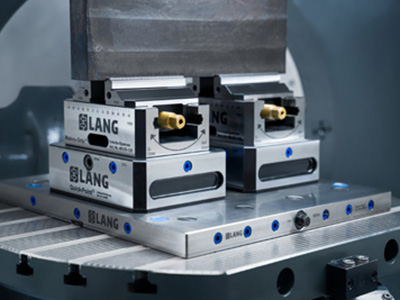
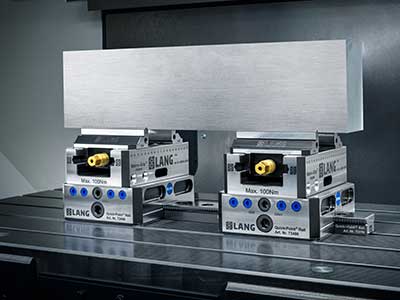
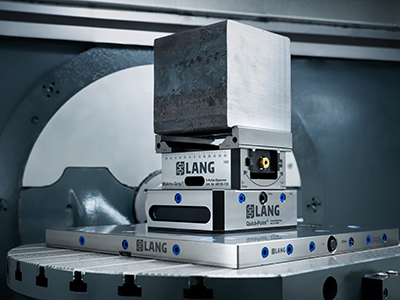
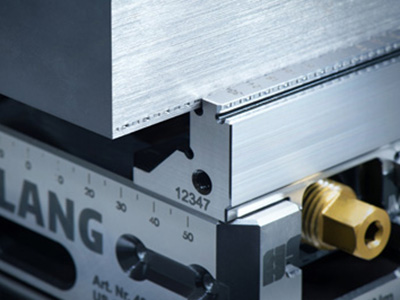
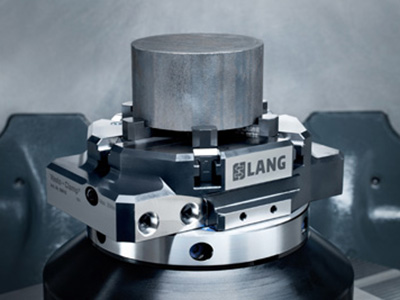
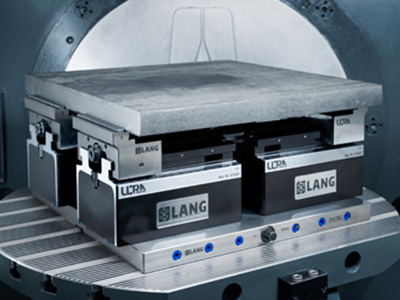
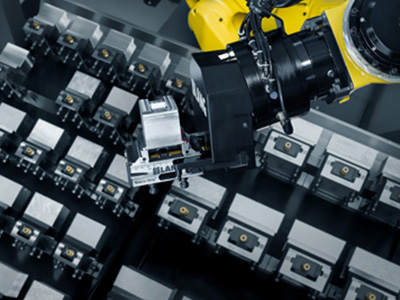
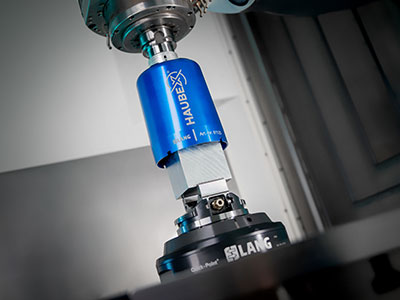
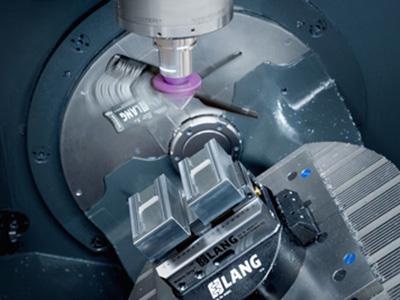
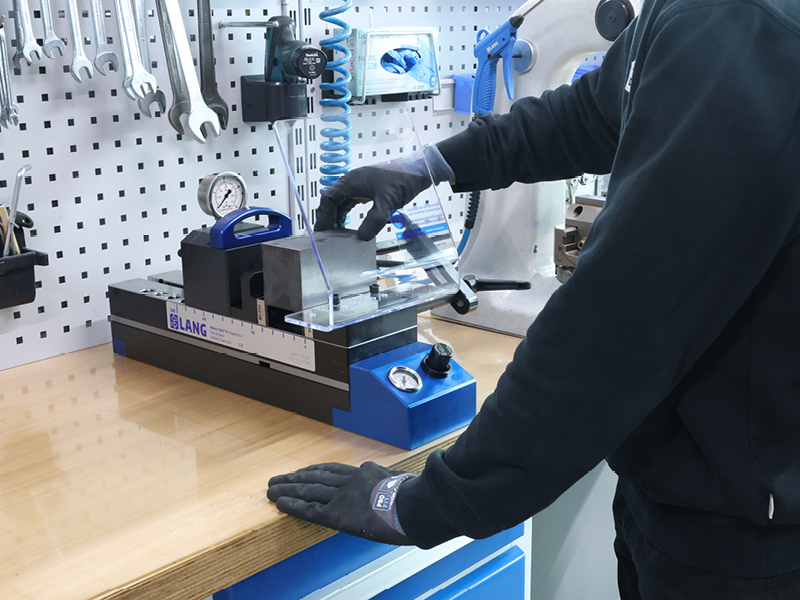
During pre-stamping, a dedicated unit presses a defined, three-dimensional pattern of indentations into the raw stock. When the workpiece is placed in the Makro•Grip® 5-axis vise, the matching serrations of the jaws engage directly with the pre-stamped contours. The result is a positive mechanical connection (form-fit clamping) that provides exceptional holding force with relatively low clamping pressure. Unlike conventional friction-based clamping, the workpiece is not held by surface pressure alone.
And because the system requires a clamping depth of just 3 mm (approximately 0.12 inches), nearly the entire workpiece remains accessible for machining. This minimizes material allowances while providing the stability needed for demanding milling operations. The pre-stamping process itself typically takes just seconds per part, making it particularly attractive for shops looking to reduce preparation time and maximize machine utilization.
Want to learn more about the technology behind it? Explore our workholding solutions for CNC milling and discover how pre-stamping, 5-axis machining, and second-operation workholding work together.
Where the real savings come from
When comparing dovetail workholding with pre-stamping, it's tempting to focus solely on how securely each system holds the workpiece.
But the real opportunity lies in the entire manufacturing process.
Machine utilization: Every hour spent milling dovetails is an hour that machine cannot spend producing finished parts. Moving workpiece preparation to a separate pre-stamping unit frees up valuable CNC capacity.
Material costs: Dovetail profiles often require oversized stock to accommodate the clamping geometry. Pre-stamping can reduce this extra material allowance, lowering purchasing costs and the amount of material that needs to be removed later.
Labor efficiency: Machining dovetails requires machine setup, programming, and operator attention. Pre-stamping simplifies preparation and allows skilled employees to focus on other productive tasks.
Fewer operations: When combined with suitable machining and workholding strategies, the Makro•Grip® system can also help reduce the number of setups needed to complete a part.
For machine shops looking to improve throughput without adding another machining center, these advantages can make a substantial difference.
From one week to half a day: a real shop example
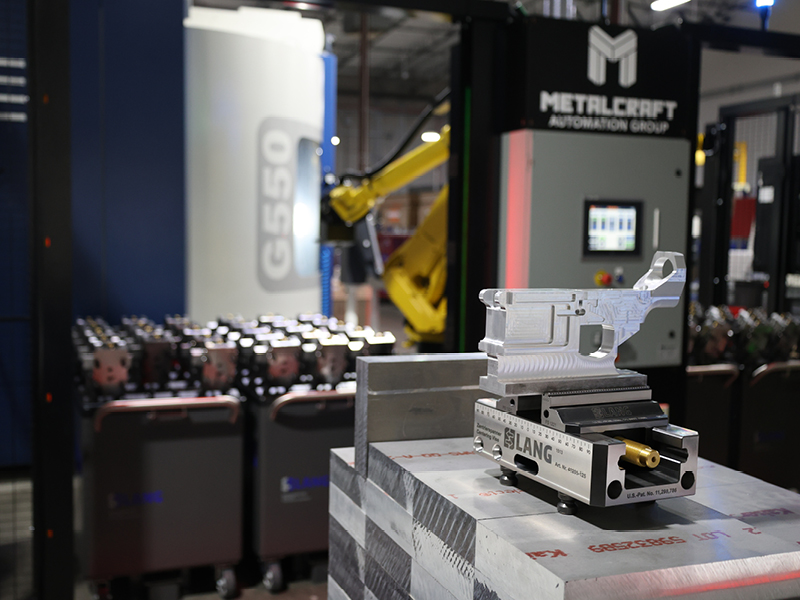
For Blackout Dynamics, an American manufacturer of precision components, the difference between dovetail workholding and pre-stamping became particularly clear. The company previously relied heavily on dovetails to prepare raw stock for machining. According to the team, preparing parts could occupy an entire machine for one or even two weeks. That meant valuable machining capacity was tied up in preparation work, while an operator was needed to keep the process running. Oversized stock also added to material costs. After introducing LANG Technik's Makro•Grip® system, the workflow changed dramatically.
What previously required an entire week of dovetail preparation could now be completed in just half a day using pre-stamping.
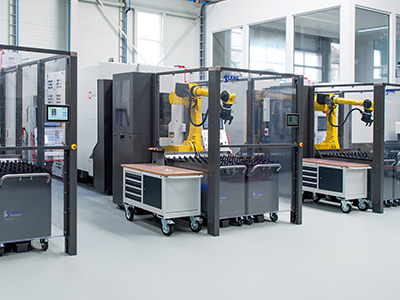
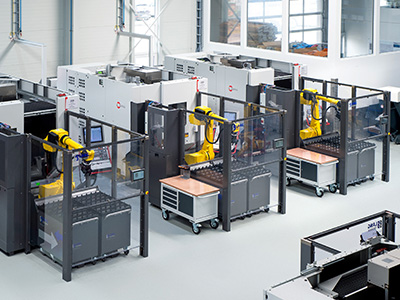
The company also found that smaller raw stock could be used, reducing material costs across its production. And the benefits didn't stop at workpiece preparation. For one major component, Blackout Dynamics previously needed six or seven operations across different machines. By combining LANG workholding with a GROB machining center, the company was able to machine the component in a single setup. The result was not simply faster preparation, but a more efficient production process with better use of machines and personnel.
Conclusion: Spend less time preparing, more time machining
Dovetail workholding remains a proven solution, particularly for applications where its specific geometry and holding characteristics are beneficial. But secure clamping is only one part of the equation. Preparation time, material consumption, machine availability, and the number of operations all contribute to the true cost of manufacturing a part. For many CNC machine shops, pre-stamping offers a compelling alternative. By eliminating the need to mill a dovetail profile, LANG Technik's Makro•Grip® system can simplify workpiece preparation, reduce unnecessary costs, and free up valuable machining capacity. As the experience at Blackout Dynamics demonstrates, sometimes the biggest productivity gains don't come from machining faster. They come from spending less time getting ready to machine.
Questions and answers
Is pre-stamping as secure as dovetail workholding?
Both methods provide a positive mechanical connection between the workpiece and the clamping system. While dovetail workholding relies on a machined undercut, Makro•Grip® pre-stamping creates a three-dimensional pattern of indentations in the raw stock. These indentations engage directly with the serrations of the vise jaws, creating a secure form-fit connection. Both methods can provide excellent holding force when properly applied, even during demanding milling operations.
Does pre-stamping work with different materials?
Yes. Makro•Grip® pre-stamping is suitable for a wide range of materials, including aluminum, steel, and stainless steel. However, the material's hardness and strength must be considered to ensure proper serration depth and reliable clamping.
Does pre-stamping eliminate the need for oversized raw stock?
Not entirely, but it can significantly reduce the additional material required for clamping. With a clamping depth of just 3 mm (0.12 inches), Makro•Grip® allows more of the raw stock to be used for the actual part, reducing material waste compared to many dovetail applications.
Can pre-stamping improve CNC machine utilization?
Absolutely. Since workpieces are prepared outside the CNC machine, valuable spindle time is no longer spent milling dovetail profiles. This frees up machine capacity for actual part production and allows operators to focus on more productive tasks.
Is pre-stamping suitable for high-volume CNC production?
Yes. Pre-stamping is particularly beneficial for repeat production and larger batches, where efficient and consistent workpiece preparation can make a significant difference. By preparing raw stock outside the CNC machine, shops can streamline their workflow, reduce repetitive prep operations, and keep machining centers focused on producing parts. The process also supports standardized workholding, making it a practical choice for automated manufacturing environments.

